On October 28, 2025 (Pacific Time), PayPal said it will adopt OpenAI’s Agentic Commerce Protocol and make its wallet available for Instant Checkout in ChatGPT—putting more than 400 million PayPal shoppers a tap away from in-chat purchases.
Why this matters
If shopping starts inside the conversation, the winners are those that control trust, after-sales, and dispute resolution—not those with the flashiest language model. PayPal’s move is an attempt to turn chat into a mainstream sales channel while exporting its two enduring moats—buyer protection and chargeback handling—into the agent era. The announcement also landed alongside solid earnings updates: the company lifted its full-year profit forecast, declared its first quarterly dividend (14¢ per share), and said shares rose roughly 10% on the day.
OpenAI’s Instant Checkout launched in late September with a small but telling footprint: U.S. Etsy sellers live today, Shopify “coming soon,” and a broader roadmap that’s deliberately processor-agnostic. OpenAI says merchants remain the merchant of record, pay a small fee on completed purchases, and can keep their existing payments provider. In that design, PayPal isn’t replacing Stripe’s early role so much as joining an open standard and supplying wallet rails, risk controls, and post-purchase services that consumers already understand.
What exactly PayPal is doing
- Wallet in ChatGPT. PayPal will be the first digital wallet available in ChatGPT’s Instant Checkout flow, with access to stored funding sources (bank, balance, cards). The Verge reports general availability “next year.”
- Processor for card payments. Beyond wallet, PayPal will also process cards for OpenAI Instant Checkout via OpenAI’s delegated payments API—i.e., not just PayPal-funded transactions.
- Merchant catalogs via ACP (2026). PayPal plans an ACP server to bring tens of millions of PayPal merchants—SMBs and big brands—into ChatGPT without one-off integrations, beginning in 2026.
The overlooked bit: who owns the refund?
In agentic commerce, liability is the moat. OpenAI’s protocol makes one choice very clear: OpenAI is not the merchant of record. Merchants keep their PSP, process payments as usual, and remain responsible for settlement, refunds, and chargebacks. Payment tokens are single-use, amount-constrained, and time-limited under the Delegated Payment Spec. That means the long, dull work of disputes, reversals and after-sales still lives with merchants and their PSPs—territory where PayPal’s buyer/seller protections and dispute tooling are already battle-hardened.
PayPal’s release leans into this: Instant Checkout with PayPal inherits buyer and seller protections, plus tracking and dispute resolution—precisely the assurances that make a one-tap, in-chat order feel safe.
Distribution: agents are the new storefront
OpenAI claims more than 700 million weekly users; Reuters pegs it at 800 million. Wherever the true figure sits this week, the direction is the same: a mass channel is forming. If a user asks an AI for “best running shoes under $100,” the first credible in-chat checkout option will capture intent at the moment it’s formed. That’s distribution you don’t have to pay Google or Meta for—if your rails plug in.
Walmart, for instance, has already said customers will “soon” shop Walmart via ChatGPT using Instant Checkout. Shopify and Etsy were day-one partners. With PayPal now joining Stripe in ACP, the protocol looks less like a niche demo and more like connective tissue between very large buyer and seller pools.
How the money flows
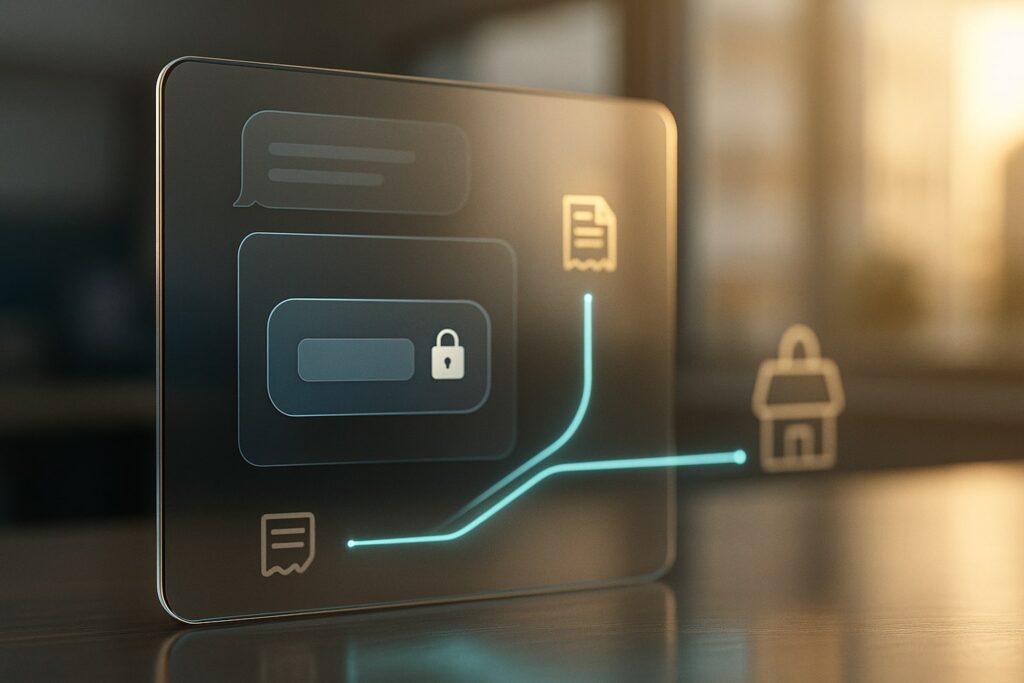
Merchant economics. OpenAI states merchants pay a “small fee” per completed purchase. Payment processing still runs through the merchant’s PSP (Stripe today, PayPal joining), so the familiar MDR/take-rate stack applies. In other words, ACP doesn’t upend payments pricing; it moves the discovery and checkout UI into chat and gives merchants a new, higher-intent funnel.
Platform economics. For OpenAI, Instant Checkout is a non-ads revenue line that scales with commerce, not compute. For PayPal, wallet share and processing volume can grow without owning the shopping surface. And because PayPal can also process card transactions for Instant Checkout (not just PayPal-funded ones), its addressable volume is larger than the wallet alone.
Investor context. PayPal’s Q3 snapshot helps frame the “so what”: TPV of $458.1bn, revenue $8.4bn, adjusted EPS $1.34, higher full-year guidance, and that first dividend. If even a sliver of ChatGPT commerce routes over PayPal rails, the incremental dollars land in a business already tuned toward profitability.
How it actually works (nuts and bolts)
- You ask; ChatGPT ranks. Product results are organic and relevance-ranked (not ads). If a result supports Instant Checkout, you see “Buy.”
- Delegated payment token. ChatGPT requests a single-use payment token constrained by merchant, amount, and expiry.
- Merchant stays in control. The merchant’s backend accepts or declines, charges via its PSP, and owns fulfillment, refunds, and support.
- Protections attach. With PayPal selected, wallet-level protections and dispute tooling apply to that transaction.
Card rails vs agent rails (what changes—and what doesn’t)
- Same: Merchant of record, PCI scope (managed via PSP specs), refund/chargeback workflows.
- New: The interface (chat instead of web checkout), the token model (delegated, single-use), and the distribution (agents recommending products).
Competitive landscape: open standard vs. new rails
ACP is an open standard for checkout orchestration. It coexists with other “agent payments” pushes. Google’s AP2 frames authorization/trust for agent-to-agent flows. Coinbase’s x402 tackles execution of internet-native, stablecoin micropayments—useful for API calls and data purchases without chargebacks. PayPal’s integration lives squarely in consumer commerce, where cards and wallets (plus buyer protection) still dominate. Expect hybrid stacks: ACP for the commerce flow; AP2/x402-like rails where machine-to-machine payments make sense.
What to watch next (operator & investor checklist)
- Timeline clarity. Wallet availability inside ChatGPT is slated for 2026 per The Verge; PayPal’s own release says merchant catalog connectivity via its ACP server comes in 2026. Track dates and early pilots.
- Merchant enablement. Which platforms light up first (Shopify, BigCommerce, Salesforce Commerce Cloud)? How easy is ACP enablement in practice?
- Fraud & disputes. Any early spike in refunds/chargebacks? How often do buyer protection claims trigger—and how smoothly are they resolved in a chat context?
- Share-of-checkout. Measure wallet selection rates in Instant Checkout vs. cards-on-file.
- Regulatory angles. Data minimization, consent, and delegated authority will draw supervisory interest as agents transact. ACP’s “merchant-owned payments” posture helps, but watch for guidance.
Bottom line
This is not just another “PayPal partners with X” headline. It’s the start of a distribution fight for AI shopping agents—and distribution has always been the most expensive part of commerce. By wiring its wallet and processing into ChatGPT’s open protocol, PayPal is betting that consumers will prefer known protections inside a new interface. If the user stays in chat, the payment brand that feels safest—and makes refunds painless—wins.